Monthly Archives: March 2013

7 Reasons to be good at Negotiation: Part 4 – It’s a sign of the times… The Global Economy

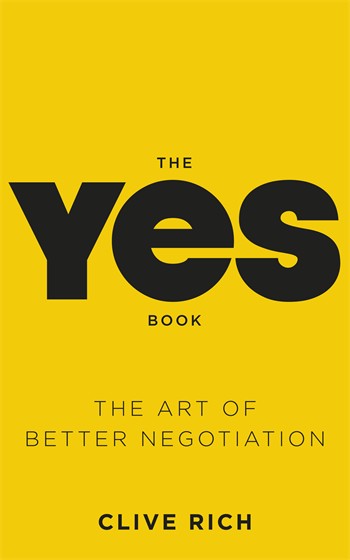
As the current economic uncertainty around the world continues, negotiation skills become even more important. This is one of the messages of my new book about the modern art of negotiation, “The Yes Book”, out on Random House on March 28th.

For five years now the global economy has been struggling against a backdrop of uncontrolled public debt, vulnerable banks, lack of credit for business and recession – all of the ingredients of that cocktail being inextricably linked. Whether it’s Eurozone bail –outs, Bank restructuring, or endless stories of single, double or even triple dips, you cannot avoid the conclusion that times are hard. This creates an imperative to negotiate better and more collaboratively…

We are all much stronger working together than we are on our own. In fact economic growth, which is the single answer to all of these problems can only be achieved if companies, governments and individuals engage in more trade – and deals are the basis of that trade.

In case you needed it, here is a reminder of some of those economic stats:

Firstly in the UK
UK growth fell again slightly in the fourth quarter of 2012, leaving Britain on the brink of a triple dip recession according to the National Institute of Economic and Social research forecasts. Only a return to growth in Q1 this year will avoid that almost unprecedented development.

The UK still has to overcome its continuing public debt problem (currently standing at 73.8 percent of GDP) and the loss of its cherished AAA rating.

Britain is apparently heading for a fifth year of falling living standards, with official figures showing a decline in average earnings growth last year from 1.7% to 1.4%.

All of this has had […]
By |March 9th, 2013|Blog|Comments Off on 7 Reasons to be good at Negotiation: Part 4 – It’s a sign of the times… The Global Economy

7 Reasons to be good at Negotiation: Part 5 – Social Media scandals are no joking matter

Here are a couple of good Twitter jokes about the recent horsemeat scandal that got re-tweeted numerous times;

ThatSillyGinge:
“Horse meat has been found in Ikea’s restaurants. There’s a joke in there somewhere, but you’ll need to assemble it yourself. #HorseMeat”

paranoiiddd:
”Not interested Tesco’s horse burgers? Try their meatballs – they really are the dogs bollocks” #tesco #horsemeat #joke”

But these kinds of jokes are no laughing matter for the Brands involved. The development of social media means that negative comment about Brands can go viral very quickly. As public relations consultant Katie Delahaye Paine commented in USA today;

“It’s all over Twitter. You can’t ignore anything related to food these days because it spreads around the world so quickly.”

This trend shows how social media is changing the nature of the negotiations that go on daily between Brands and consumers for their attention, their custom and their goodwill. This is one of the themes covered in my new book on negotiating, “The Yes Book”, out on Random House on March 28th.

Brands can no longer assume that they can dictate their own marketing messages, fuelled by spin. Consumers have an increasingly vocal say in the reputation of Brands and this means that in their negotiations with us Brands have to be ethical, transparent and considerate. In the terminology of my book they need to be “Fusers” genuinely concerned with the interests of their customers, rather than “users” only interested in their own gain, often at the expense of the consumer. This is yet another example of a number of social trends outlined in the book which all point to the need for us to raise our game as negotiators, and consciously apply a negotiating framework to our deal […]

By |March 17th, 2013|Blog|Comments Off on 7 Reasons to be good at Negotiation: Part 5 – Social Media scandals are no joking matter

Lessons to be learned from Cyprus Bailout Deal…

There has been a big negative reaction to the Cyprus bailout deal – but why? Well, there are a number of big problems here from a negotiating perspective;

1) There was no warning before the EU attempted to foist a bank raid on the citizens of Cyprus. If you are going to push someone around in a negotiation then it’s important to give a signal first. If you just spring it on them as a surprise then you create a lot of resentment, as the EU has discovered, because the discomfort is compounded by the fact that it was unexpected.

2) People in a negotiation are always more concerned with potential losses of things they already have, than opportunities to gain more. So, take away their deposits and you can expect howls of protest.

3) If you show you can’t be trusted people will be very wary of dealing with you. This scenario shows that the EU will contemplate forcing ordinary citizens to take the rap for the failings of their Banks. At a time when the EU most needs to build reassurance in its institutions and its currency, It has instead showed that it cannot be trusted with your money.

Investors and ordinary citizens in other countries will take note…

By |March 26th, 2013|Blog|2 Comments

7 Reasons to be good at Negotiation: Part 6 – MY Space is YOUR Space… The Impact of Convergence

In my forthcoming book on the modern art of negotiating, “The Yes Book” I talk about a number of social trends which are combining to make skilful deal-making more important than ever.

One of these trends is “convergence”, the phenomenon by which technology melts the boundaries between different sectors and different parts of a supply chain so that everybody can compete with everybody else. In the old days there may have been a clear distinction between manufacturers, wholesalers, distributors and retailers in different sectors but technology means that is no longer the case. This means that companies have to be able to negotiate more effectively with partners – both to defend their own patch and to take advantage of the cross sector opportunities which convergence opens up.

Consider, for example, the Media sector where the impact of convergence is particularly clear. Here are some examples – notice how the opportunities all revolve around the ability to create deal partnerships which would not have been relevant prior to the current technology revolution. Good negotiation is at the centre of success or failure in responding to convergence.
(A) Advertisers are becoming content owners…

Red Bull is a good example of this.

They endorse a series of ‘extreme’ sportsmen and women and create branded content around that – viral You Tube videos, tv adverts or special one off programmes/stunts.

Whether it’s Robbie Maddison attempting to backflip across London Bridge on a motorbike (in July 2009) or Austrian daredevil Felix Baumgartner skydiving from the corner of space (24miles up) and freefalling at the speed of sound (in Oct 2012), two things are always present with the associated video content:

1) The equipment […]

By |March 26th, 2013|Blog|Comments Off on 7 Reasons to be good at Negotiation: Part 6 – MY Space is YOUR Space… The Impact of Convergence