clive

“Pie” is not a fixed number for the Public Sector

The threat of public sector strikes has now widened from protest over pension reform to protest at the proposed public sector pay freeze. The coalition government has frozen public sector pay for two years, calling it vital to help drive down the budget deficit. Ministers say the pay-freeze will save the government £3.3bn a year.

The TUC voted at its annual Congress to support a co-ordinated strike action if talks over the public sector pay-freeze break down. Unison boss Dave Prentis said ministers had “declared war on our people” and vowed to lead a “fightback”. Mark Serwotka, general secretary of the Public and Commercial Services union, said that a “sense of urgency” was needed:
“The way to really push the government is to follow up the day of demonstration by mass co-ordinated strike action across the public and private sectors.” Ed Miliband has said that he will attend the Trade Union march against the government’s austerity strategy planned for that date.

At the same time, a spokesman for David Cameron said there will be no compromise on the public sector wage freezes or pension cuts:
“We have put in place some changes in pensions and we do not intend to reopen these talks. We have put in place a public-sector pay freeze for two years and we do not intend to reopen that decision either. Strike action would benefit no-one.”

Positions not Motivations

The negotiation feels very positional and therefore very fixed. On this basis it’s not possible for either side to win except at the expense of the other. However, the most effective negotiations arise when each side focuses on the motivations of the other side – why they want the things […]
By |October 10th, 2012|Blog|Comments Off on “Pie” is not a fixed number for the Public Sector

Romney takes his Mitts off…

The first televised debate between Mitt Romney and President Obama has thrown up a welter of analysis.

Most pundits seem to agree that Romney performed better than the President without delivering a knock-out blow. Experts have argued that Obama ‘s low key performance was the result of a variety of factors; from unassertive body language (a reaction against criticism from some corners of the media that he had been ‘too confrontational’ during a speech the night before?), to lack of recent practice in the white heat of live political debate, to complacency in the face of an opponent who can normally be relied on shove his foot firmly in his mouth at some point.

From a negotiating point of view it was interesting to watch the different negotiating tactics deployed by the candidates. This, after all, is a negotiation for the hearts and minds of the US electorate. One of the keys to successful negotiation is to select the right negotiating behaviour to influence the person you are dealing with. Every individual is different, and has different traits and patterns of thinking. So, different negotiating behaviour is normally called for in each deal. If you select a behaviour which resonates with the way that the person on the other side routinely interprets the world, then you have a better chance of influencing them.

Working with the Social Norms

Of course, this creates a problem when you are trying to influence 250 million people at once. In these circumstances it pays to work with social norms which are apparent among that group – typical behaviours or patterns of thinking which are by no means displayed by everybody but which are typical of the audience you are addressing. […]

By |October 11th, 2012|Blog|Comments Off on Romney takes his Mitts off…

RBS fails to close that deal and pays the price

The proposed sale of 316 RBS and Nat West branches to Santander has fallen through after more than two years of negotiations. This is a good example of the importance of “closing the deal” when you get the chance. Closure is a fluid moment, and if you take too long you can miss the moment and find the deal collapses on you.

RBS was originally ordered to sell the branches by the European commission as a condition of it receiving “state aid” at the height of the financial crisis, when RBS became state owned. An agreement to sell the branches was signed in August, 2010, and at that time the parties said that it would take them 15-18 months to complete. However, the IT task of separating out the 1.8 million RBS customers affected by the sale from the rest of the RBS database has seemingly proved beyond them, even though many of those customers had already been allocated new sort codes and account numbers, and, as RBS CEO, Stephen Hester, put it “Much of the heavy lifting has already been done”. Nonetheless, after two missed deadlines for completion, a recent Accenture report apparently noted that it would be the middle of 2015 before the transaction was in fact ready to complete. Santander seems to have concluded that the deal was going to take too long and has pulled the plug on it.

This turn of events is not surprising. If you wait too long to close a deal, any number of factors can cause a problem with completion. The other side can get deal fatigue, or buyer’s remorse, or key characters on the other side may leave. The other side may identify alternative competitors […]

By |October 17th, 2012|Blog|Comments Off on RBS fails to close that deal and pays the price

Has the Eurozone served enough bargaining power “aces”?

If you want to make a bid successfully in a negotiation, the other side has to believe that you mean what you say. Partly that is a question of bidding effectively by clearly addressing the motivations on the other side of the table. Partly it is a question of marshalling your bargaining power so that the other side feels that your bid has enough weight to be convincing.

The institutions of the Eurozone have been in a long running negotiation with the financial markets. The objective has been to persuade the financial markets that the Eurozone has a credible plan for dealing with its indebtedness. That way, investors can safely continue to buy government bonds, rather than starve governments of further investment, or pricing their investment at such high interest rates, that the debt collapses beneath its own weight. If a collapse occurs in any country then that country can no longer realistically remain part of the Euro.

I have written a number of blogs on this subject lamenting the uncertain series of previous “bids” made by the Eurozone institutions to persuade the markets that it has a credible strategy to cover Greece, other struggling countries like Portugal and Spain, and the Eurozone generally. Previous efforts to create bail-outs and/or guarantees have seemed piecemeal and unconvincing – it’s almost as though the Eurozone institutions feel that the process of discussing potential proposals is more important than the answers created. This buys them enough time that an actual answer may appear from somewhere else.

Sometimes these interim measures have bought a temporary respite, but usually once the financial markets have digested the announcements, they have given the proposals the thumbs down and so the crisis has […]

By |October 17th, 2012|Blog|Comments Off on Has the Eurozone served enough bargaining power “aces”?

Will Rosneft oil deal be a Bonanza for BP?

As the dust settles on the BP-Rosneft Russian oil deal it’s going to be intriguing to see what negotiating tactics BP employs from here in order to try and make the deal a success.

There is plenty of potential for BP in the deal. It has already taken some advantage of the windfall of its US$12.3 cash from the deal and promised an increased dividend for weary shareholders whose returns have been battered since BP’s disaster in the Gulf of Mexico. It will now have a stake of nearly 20% in the world’s largest oil company, as well as a ringside seat as exploitation of Russia’s arctic oil reserves gets underway. It also escapes the stalemate with Russian oligarchs that had afflicted its preceding Russian joint venture, TNK-BP. However, there are obvious negotiating dangers arising from this Russian bear-hug.

Negotiating Dangers

For a start, there are some social norms that are a useful starting point to negotiating in Russia. They don’t apply all the time because every negotiation is different and every individual is different, but it’s important to be aware of these norms.

Russian negotiators are often fairly tough with an attitude of making maximum initial demands in return for minimal concessions. Use of Tough Guy tactics like aggression, threats, setting deadline pressure, using take it or leave it tactics is quite common. It is normal for contracts to represent only a snapshot of agreement, so that the terms continue to be negotiated. So BP cannot assume that just because agreement has been reached now, that means the negotiation will stop.

In this ongoing negotiation BP has a further problem because it will be a minority shareholder in Rosneft without much control and dealing with a […]

By |November 3rd, 2012|Blog|Comments Off on Will Rosneft oil deal be a Bonanza for BP?

Misguided Missile from EU rebels…

Interesting to see Tory MP John Redwood defending the actions of the rebel MP’s who voted against the Coalition, and with Labour, to inflict a Commons defeat over the UK’s negotiating stance regarding the EU Budget for the period 2014-20.

David Cameron’s position over budget negotiations so far has been to insist that the Budget should stay frozen in real terms – i.e. when adjusted for inflation. This is the position he proposes to take to next month’s Council summit meeting – with the threat of using the UK’s veto if the other EU countries do not agree to it. The response articulated by the likes of John Redwood was that this does not go far enough, and at a time when Britain’s own Public Spending plans are being squeezed, the UK should insist that the EU should also reign in its budget with real cuts of its own.

You can understand the raw emotional appeal of this position at a time when citizens in the UK and many other EU countries are bearing the full weight of austerity measures. How realistic is this as a negotiating stance though?

Don’t bid more than you can Reasonably Justify

John Redwood suggested that as a negotiator you should always ask for more than what you want, then see what happens and negotiate accordingly. Is this a sophisticated enough view of the process of bidding when negotiating? Certainly when you put in a bid as a negotiator it should be the strongest bid you can reasonably justify. However, that “reason” that you give needs to be good enough not just to justify the bid to yourself, but also for the other side to understand and appreciate why you have made that […]

By |November 4th, 2012|Blog|Comments Off on Misguided Missile from EU rebels…

Tubeway Barmy Army

So, another strike has taken place by London Transport drivers on Boxing Day. This is the third year in a row that strike action has affected Boxing Day services and the dispute seems no closer to resolution. So who is boxing clever in this dispute and who is boxing themselves in?

The origin of the disagreement seems to be in the demand expressed by Aslef union members for an additional £250 to be paid to drivers who work on Boxing Day. London Transport maintains that salaries already include an element that reflects some bank holiday working.

It is impossible to know exactly what is going on inside this dispute, but some observations can be made which hold true whatever the internal dynamics of the argument…

1) Firstly, there does not seem to be much regard being paid to the underlying motivations behind the dispute. London Underground seems very focused on not being seen to roll-over in response to Aslef’s financial demand, but a more important question is why is Aslef making that demand. Asking yourself why people want the things they want in a negotiation is always more constructive than just opposing them, because it opens up the possibility of resolving the dispute in other ways. Aslef drivers have apparently voted 9-1 in favour of strike action over each of the last 3 years, so whatever their motivation is, it seems deeply held.

From a distance a good bet would be that the dispute is about “recognition”. People often need acknowledgment in a negotiation – acknowledgement of their worth, of their feelings, of their aspirations. Once this is understood then other resolutions become possible. Paying extra for Bank Holiday work may be one way […]

By |January 8th, 2013|Blog|Comments Off on Tubeway Barmy Army

US Deficit still a Cliff-hanger

The US congress may have temporarily averted a disastrous plunge over the fiscal cliff, by agreeing to a last minute deal over tax rises and spending cuts. But all the indications are that the sense of relief all round is just temporary, and this fractious negotiation will continue to defy resolution as a new crisis develops in the Spring. From a negotiating point of view, is there anything which can be done to break this cycle?

After much ill-tempered debate, Congress finally approved a deal in which the top rate of tax rises from 35% to 39.6% on those with incomes exceeding US$400k (US$450k for couples). Income Tax rises for the remainder of the population were avoided, which might have tipped the US back into recession. However, the deal only affects the wealthiest 2% of Americans. Moreover it did not stop the expiry of a temporary cut to payroll taxes for 160 million Americans, which fund social security. Furthermore a decision over more than US$100 billion of scheduled public spending cuts was simply postponed from January 1st to March 1st. In addition, the US debt ceiling of US$16.4 trillion will now need to be raised, setting the scene for a further round of brinkmanship over the coming 8 weeks.

The scenario resembles the game of “chicken” often used by negotiating researchers, in which two cars hurtle towards each other on a single track. There can only be a winner if one driver swerves off the road in order to avoid a collision. In this case enough Republicans in the House of Representatives voted to swerve off the road in order to avoid a crash. But that doesn’t mean they will do the same next […]

By |January 8th, 2013|Blog|Comments Off on US Deficit still a Cliff-hanger

The Hare and the Tortuous

Interesting piece from Andrew Sullivan in the Sunday Times about Obama’s approach to negotiations in foreign policy hot-spot areas like Iran and Israel (here). Sullivan argues against the conventional wisdom that Obama has been unsuccessful in making progress in negotiations with these two countries, but is instead playing a “long game”. If this is true then this kind of patience is a good example of an approach which is all too often absent in modern negotiations, where participants often look too impatiently for quick wins.

Iran’s regime has shown no inclination to compromise over its alleged development of nuclear weapons, and Israel has belligerently resisted efforts to force it to embrace a two state solution for Palestine or even to take a backward step in relation to building settlements in “occupied” territory. Yet Sullivan argues that Obama has simply been taking his time and allowing those who oppose him to defeat themselves rather than forcing the pace. Iran has become weaker economically as sanctions have bitten, and its currency is almost worthless. Obama has persuaded even China and Russia to impose sanctions. Sullivan argues that Religious leaders of Iran may be close to either being forced to accept international scrutiny of their nuclear power programme – or they risk being isolated internationally and presiding over an increasingly mutinous population. Israel has also become more isolated by its intransigence – its relationships with supporters like Turkey and the US have cooled significantly. It now faces the development of a non-Jewish majority in the territories it refuses to let go. The US can safely dilute its support even further as it becomes less dependent on Middle-eastern oil and more able to rely on home produced […]

By |February 6th, 2013|Blog|Comments Off on The Hare and the Tortuous

Striking similarities

All too often in industrial disputes, the two sides appear to get locked into a mental attitude of “losing both ways”. One or both sides decide that they can’t get what they want, and so they make it their business to punish the other side. This then becomes a more important objective than thinking round the problem to find a new solution which suits everybody.

I was reminded of this when reading in the Guardian that the Public and Commercial Services union has warned of new strike action over its ongoing dispute concerning pay, pensions and working conditions (here). It has said it will ballot its 250,000 members starting tomorrow. The union, led by the redoubtable Mark Serwotka, has already held three previous days of strike action, and is now focused on a review of working conditions which it says threatens working hours, sick pay and holiday benefits.

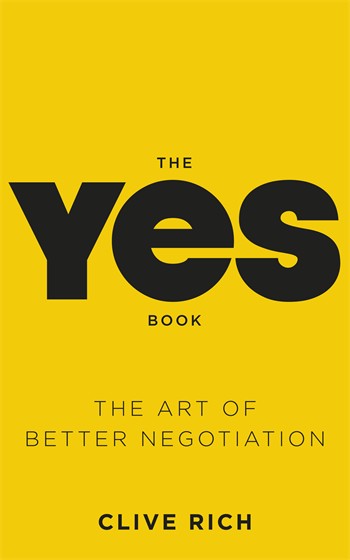
Given the current Government priority to manage the Public Sector deficit, this is not an argument which the Union is likely to win – the Government is determined to rein in Government spending. So strike action may seem like a good way of punishing the Government, even though it does not bring about any greater prospect of negotiating success, is disruptive for members of the Union and the General public, and may well harden Public opinion against the Union cause. This is losing both ways in action. I mention this phenomenon in my forthcoming book on negotiation, “The Yes Book”, published on Random House on March 28th. Here is a story, originally written for the book, though I subsequently took it out, about the UK Miners’ strike of 1984 which illustrates the futility of taking […]

By |February 6th, 2013|Blog|Comments Off on Striking similarities