clive

7 Reasons to be good at Negotiation: Part 6 – MY Space is YOUR Space… The Impact of Convergence

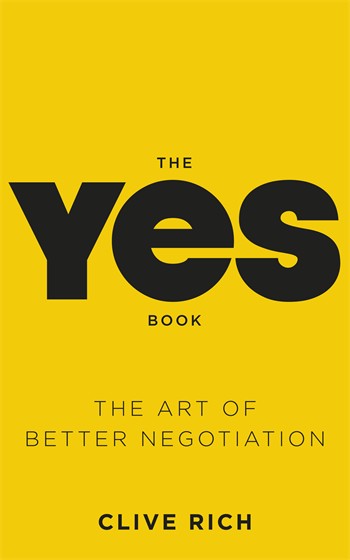
In my forthcoming book on the modern art of negotiating, “The Yes Book” I talk about a number of social trends which are combining to make skilful deal-making more important than ever.

One of these trends is “convergence”, the phenomenon by which technology melts the boundaries between different sectors and different parts of a supply chain so that everybody can compete with everybody else. In the old days there may have been a clear distinction between manufacturers, wholesalers, distributors and retailers in different sectors but technology means that is no longer the case. This means that companies have to be able to negotiate more effectively with partners – both to defend their own patch and to take advantage of the cross sector opportunities which convergence opens up.

Consider, for example, the Media sector where the impact of convergence is particularly clear. Here are some examples – notice how the opportunities all revolve around the ability to create deal partnerships which would not have been relevant prior to the current technology revolution. Good negotiation is at the centre of success or failure in responding to convergence.
(A) Advertisers are becoming content owners…

Red Bull is a good example of this.

They endorse a series of ‘extreme’ sportsmen and women and create branded content around that – viral You Tube videos, tv adverts or special one off programmes/stunts.

Whether it’s Robbie Maddison attempting to backflip across London Bridge on a motorbike (in July 2009) or Austrian daredevil Felix Baumgartner skydiving from the corner of space (24miles up) and freefalling at the speed of sound (in Oct 2012), two things are always present with the associated video content:

1) The equipment […]
By |March 26th, 2013|Blog|Comments Off on 7 Reasons to be good at Negotiation: Part 6 – MY Space is YOUR Space… The Impact of Convergence

7 Reasons to be good at Negotiation: Part 7a – Things are Hotting up…

In my new book on negotiating, “The Yes Book”, now out on Random House, I describe some social and business trends which are changing the way that we negotiate and making it essential that we up our game as negotiators. I have split the last part of my blog series into three parts – all related to the environment – the first of the trends I will look at is climate change.

Successive climate change conferences have illustrated some stark choices for nations as to whether to collaborate with each other creatively, or negotiate selfishly over the impact of climate change in a more traditional and old fashioned way.

There seems to be little hope that global temperature rises can now be contained below 2 centigrade. The International Energy Agency in its World Energy Outlook predicts that 2017 will be the year when the world is “locked in” to a rise in global temperatures of at least 2 degrees Celsius. For the world to halt warming at that 2-degree level, it would need to ensure that all additional energy infrastructure was zero carbon or begin phasing-out existing infrastructure before the end of its useful economic life. That is not going to happen.

Experts clamour to warn us of the dire consequences of an increase in global temperatures of 4%. A 4 Centigrade rise in the planet’s temperature (currently predicted for around 50 years’ time) would see severe droughts across the world and millions of migrants seeking refuge as their food supplies collapse.

A series of “thresholds” could be crossed, including the permanent absence of summer ice in the Arctic, loss of most of the tropical coral reefs, disappearance of coastal wetlands, melting of the permafrost […]

By |April 2nd, 2013|Blog|Comments Off on 7 Reasons to be good at Negotiation: Part 7a – Things are Hotting up…

7 Reasons to be good at Negotiation: Part 7b – Resource shortages… a mixture of oil and water?

In the final part of my series on how social changes are making good negotiating skills even more important, I focus on the effect of resource shortages. As I argue in my book on negotiating, “The Yes Book”, now out on Random House, these changes require us to up our game as modern creative negotiators rather than continuing with old fashioned styles of negotiation based purely on brinkmanship and the application of power. Shortages of water, and fossil fuels both illustrate this imperative.

(A) Water

One of the by-products of global warming from climate change is that water is becoming scarcer, with the increases in temperature coinciding with a peak in world population and the extra demand on food and water resources as a result. The gloss is taken off forecasts of greater economic progress for China and India by predictions of water shortage.

China has a strategic water shortfall. It has almost four times the population of the United States but only the equivalent of one-third of America’s water resources. China’s groundwater reserves are already over-exploited, and water tables are dropping. As the racing economy guzzles it faster and faster, the problem worsens. Fifty percent of cities have been left without drinking water that meets acceptable hygienic standards, according to the World Wildlife Fund.

India is worse off. It depends on the monsoons and flows from the Himalayan glaciers, which are retreating. India has to sustain 20 per cent of the world’s population with just 4 per cent of the world’s freshwater. The Ganges is polluted and water volume on the Indus – a river crucial to both India and Pakistan – is down 30 per cent. As India’s middle-class grows rapidly, its food and […]

By |April 5th, 2013|Blog|Comments Off on 7 Reasons to be good at Negotiation: Part 7b – Resource shortages… a mixture of oil and water?

7 Reasons to be good at Negotiation: Part 7c – All you need is Love… and Minerals

In the final part of my blog series featuring content edited out of my book The Yes Book (now out on Random House), I take a look at China’s behaviour in relation to its negotiations over shortages of essential modern minerals required for industrial production. It seems very much to be a mixture of “pressures” and “incentives” – a push-me, pull-you approach.

Some nations are stockpiling important materials and restricting exports in an attempt to protect their own businesses from increasingly fierce global competition. Among the countries known to be stockpiling resources, Japan has said it is storing supplies of seven rare materials it believes are essential to modern life and industry. China is also accused of this behaviour. The United States, the European Union and Japan filed complaints last year with the World Trade Organization charging that China is limiting its export of rare earths, minerals that are vital to the production of technology components.

China has a strong hold on the global supply of 17 rare earth minerals that are essential for making high-tech goods including hybrid cars, weapons, flat-screen TVs, mobile phones, mercury-vapour lights, and camera lenses. However, China has cut its export quotas of these minerals over the past several years to cope with growing demand at home, though the government also cites environmental concerns as the reason for the restrictions. U.S. industry officials suggest it is an unfair trade practice, against rules established by the WTO, a group that includes China as a member.

China is also adopting a more subtle approach to the problem though. Chinese are arriving in Africa in ever greater numbers. An estimated one million are now resident in Africa, up from a few […]

By |April 9th, 2013|Blog|Comments Off on 7 Reasons to be good at Negotiation: Part 7c – All you need is Love… and Minerals

Thatcher ‘The Negotiator’ – When a Strength can also be a Weakness…

The death of Baroness Thatcher has prompted a review of her negotiating style. She was widely regarded as being combative, stubborn, uncompromising – a real “Iron Lady”.

Some commentators have described this kind of approach as a great strength which helped make Britain respected on the world stage. Others have said that this “precipice” style of negotiation was her Achilles heel and led to her downfall.

So who is right? Certainly I believe that a collaborative style of negotiation is generally appropriate for a modern inter-dependent world. However, I also believe that it’s right to stand up to tough guys who try to push you around – if you don’t make their behaviour the issue then they will keep pushing you. The real skill as a negotiator is to have the judgement to know when to push tough guys back, and when to collaborate.

Viewed in this context it is a bit easier to evaluate Baroness Thatcher’s approach. There is no doubt that she knew when to stand up to tough guys – whether that was the Argentinian Junta invading the Falklands, EU commissioners or other EU leaders trying to rail-road Britain into unfavourable agreements, or bellicose Union leaders like Arthur Scargill. Standing up to these individuals ultimately made them back off and earned Mrs Thatcher many plaudits.

However, you need more than one gear to drive with when you are a negotiator. Not everybody who has a different point of view to you is a tough guy who needs to know that you will not blink. Often if people genuinely disagree with you that is a signal for a co-operative negotiation approach which can enable everyone to get more of what they want, rather than an attritional […]

By |April 10th, 2013|Blog|Comments Off on Thatcher ‘The Negotiator’ – When a Strength can also be a Weakness…

Clive Rich on BBC Radio

In March of this year I was interview by Mai Davies of BBC Wales. We discussed many things related to negotiation – it was great fun.

Have a listen below.

If you want to know more about negotiation, I strongly recommend you take a look at the Yes Book. It is my 30 years of experience compressed into a great read, so that you can easily become a better negotiator.

Get the Yes Book from Amazon

By |July 27th, 2013|Advice, Blog|Comments Off on Clive Rich on BBC Radio

How To Deal With Tough Guys In Negotiation

We have all encountered tough guys in our negotiating experiences. These are people who try to manipulate or exert pressure tactically – they are only in it for themselves. They may shout, make threats, play good cop/bad cop, issue ‘take or leave it’ ultimatums, or just plain lie.

It’s tempting to ignore these people, and not to descend to their level. That’s the professional thing to do, right? Wrong. If people are behaving badly then the best thing to do is to stop the negotiation and make their behaviour the issue. Since most bad behaviour is tactical, if you show that you know what is going on, then mostly the tough guy will drop the bad behaviour – there is no point continuing with it if the tactic has been rumbled.

So, if someone is shouting at you, you can say something like;

“Would it help if I shouted too?” or…

“I’m curious, what would you do if you walked into a negotiating meeting and someone shouted at you?” or…

“We believe in negotiating not shouting, shall we start again?”.

Any intervention like this will stop the bad behaviour – you don’t have to be as aggressive as they are being in order to make the point.

Equally, if someone is paying “good cop/bad cop” with you, then you can say something like “I’m confused, one of you is being very helpful about this and the other is being very tough. Let’s take a five minute break so you can agree a common approach and then we can start again”. That should sort it out.

If someone accuses you of being “unfair” or “unreasonable” when that is what they are doing themselves, you can ask them “what do you mean by “fair”?”. […]

By |July 31st, 2013|Blog|2 Comments

The Importance of Harmony and Team Unity in Negotiation

We all negotiate as a team sometimes. This is when negotiations can go spectacularly wrong, with in-fighting and disunity causing chaos. Sometimes members of the team will deliberately starve other members of information or involvement. Sometimes they may even be more preoccupied with making a colleague look bad then getting the right result for the team.

There are a couple of tips for avoiding this;

1. Come prepared

First of all, preparation is even more important in team negotiations than in other types of negotiation. If the team is not prepared it is uncanny how the other side will gravitate towards the least prepared member in order to exploit the resulting lack of organisation. In this sense “the team” includes everybody on your side who has a stake in the outcome and not just those doing the negotiation directly – so make sure you involve everybody: stakeholders who feel left out may sabotage the deal later if they feel aggrieved.

That preparation must include:

All the usual elements of agreeing timing, roles, agenda, approach, risks and also agreeing a bottom line.

Making sure that all participants are aligned behind the team’s negotiating objectives. If someone doesn’t believe in the team position than the other side will sniff them out and exploit the gap. If someone is not aligned then don’t parade them in front of the other side – they should stay out of the face to face negotiation and their objections can be dealt with behind the scenes.

If, despite this preparation, disunity breaks out in a meeting with the other side, call a break immediately and deal with the problem internally. There is nothing worse than conveying disagreement amongst yourselves to the other side. It looks weak […]

By |August 2nd, 2013|Blog|Comments Off on The Importance of Harmony and Team Unity in Negotiation

Understanding Your Bargaining Power In Negotiation

People frequently believe that they don’t have enough bargaining power in a negotiation and that the other side holds all the aces. This is very damaging, as if you don’t believe you have enough bargaining power you won’t bid ambitiously, and you may look and sound apprehensive. This encourages the other side to push you harder, and before you know where you are, the negative outcome you were fearing has happened.

It is normally a misconception that the other side has all the bargaining power since there are at least 10 sources of bargaining power and they are rarely arranged 10-nil in favour of anybody – you always have more aces than you think.

For example:

You may not be a big company but you may have “niche” marketing power – the power to command a particular desirable niche.

Your smaller size may make you more nimble or flexible than a bigger company.

Maybe you command a scarce resource even though you are small.

Maybe you are small but have worked out plenty of alternative options to this deal – that gives you a kind of market power too.

You may have expertise on your side or extra information – you often hear people saying that “information is power” – they are right.

You may have “authority” power – because you have seniority or reputation on your side, or even a uniform – the police rely on the power of their uniform to negotiate successfully with the public every day.

You may have “network power”. This is the power to plug into a network that can be marshalled in your support. If you have a big network that someone else wants access to that can be just as valuable as having […]

By |August 9th, 2013|Blog|Comments Off on Understanding Your Bargaining Power In Negotiation

How to Negotiate through Relationship Breakdown

Very often we have to negotiate in circumstances where a relationship has previously broken down, or breaks down during the negotiation process. This is not an easy scenario. Discussions against this backdrop may be marked by recriminations, mistrust, suspicion, mistaken presumptions about the attitude and motives of the other side, and a whole host of bad behaviours including sarcasm, contempt and aggression. This presents us with the question, how do you begin to repair a broken relationship?

Here are some options:

Recognise the problem:
Firstly, acknowledge the problem at hand rather than ignoring it. “We don’t seem to be getting on very well. What can we do to change that?”

Listen and offer an understanding:
Secondly, if you want to restore trust you then have to really listen to the other side. Active listening involves summarising and playing back to the other side feelings as well as information – “I can see you are very upset by that”…. One of best pieces of advice ever given to me as a negotiator was to “use your mouth and your ears in the proportions God gave you”. That means twice as much time should be spent listening in a negotiation as talking. This is particularly important when trust has gone astray. Listening also means acknowledging the validity of the other side’s feelings, “well, I can see why you are upset, looking at it from your point of view, even though I view it differently.”

Make positive changes:
Other tips include breaking the patterns of behaviour which have created the bad relationship. Change the venue where you usually meet. Change the make-up of the teams so as to introduce new players not affected by the same emotional baggage. If you never socialise […]

By |August 12th, 2013|Blog|Comments Off on How to Negotiate through Relationship Breakdown