Blog

Will Rosneft oil deal be a Bonanza for BP?

As the dust settles on the BP-Rosneft Russian oil deal it’s going to be intriguing to see what negotiating tactics BP employs from here in order to try and make the deal a success.

There is plenty of potential for BP in the deal. It has already taken some advantage of the windfall of its US$12.3 cash from the deal and promised an increased dividend for weary shareholders whose returns have been battered since BP’s disaster in the Gulf of Mexico. It will now have a stake of nearly 20% in the world’s largest oil company, as well as a ringside seat as exploitation of Russia’s arctic oil reserves gets underway. It also escapes the stalemate with Russian oligarchs that had afflicted its preceding Russian joint venture, TNK-BP. However, there are obvious negotiating dangers arising from this Russian bear-hug.

Negotiating Dangers

For a start, there are some social norms that are a useful starting point to negotiating in Russia. They don’t apply all the time because every negotiation is different and every individual is different, but it’s important to be aware of these norms.

Russian negotiators are often fairly tough with an attitude of making maximum initial demands in return for minimal concessions. Use of Tough Guy tactics like aggression, threats, setting deadline pressure, using take it or leave it tactics is quite common. It is normal for contracts to represent only a snapshot of agreement, so that the terms continue to be negotiated. So BP cannot assume that just because agreement has been reached now, that means the negotiation will stop.

In this ongoing negotiation BP has a further problem because it will be a minority shareholder in Rosneft without much control and dealing with a […]
By |November 3rd, 2012|Blog|Comments Off on Will Rosneft oil deal be a Bonanza for BP?

Misguided Missile from EU rebels…

Interesting to see Tory MP John Redwood defending the actions of the rebel MP’s who voted against the Coalition, and with Labour, to inflict a Commons defeat over the UK’s negotiating stance regarding the EU Budget for the period 2014-20.

David Cameron’s position over budget negotiations so far has been to insist that the Budget should stay frozen in real terms – i.e. when adjusted for inflation. This is the position he proposes to take to next month’s Council summit meeting – with the threat of using the UK’s veto if the other EU countries do not agree to it. The response articulated by the likes of John Redwood was that this does not go far enough, and at a time when Britain’s own Public Spending plans are being squeezed, the UK should insist that the EU should also reign in its budget with real cuts of its own.

You can understand the raw emotional appeal of this position at a time when citizens in the UK and many other EU countries are bearing the full weight of austerity measures. How realistic is this as a negotiating stance though?

Don’t bid more than you can Reasonably Justify

John Redwood suggested that as a negotiator you should always ask for more than what you want, then see what happens and negotiate accordingly. Is this a sophisticated enough view of the process of bidding when negotiating? Certainly when you put in a bid as a negotiator it should be the strongest bid you can reasonably justify. However, that “reason” that you give needs to be good enough not just to justify the bid to yourself, but also for the other side to understand and appreciate why you have made that […]

By |November 4th, 2012|Blog|Comments Off on Misguided Missile from EU rebels…

Tubeway Barmy Army

So, another strike has taken place by London Transport drivers on Boxing Day. This is the third year in a row that strike action has affected Boxing Day services and the dispute seems no closer to resolution. So who is boxing clever in this dispute and who is boxing themselves in?

The origin of the disagreement seems to be in the demand expressed by Aslef union members for an additional £250 to be paid to drivers who work on Boxing Day. London Transport maintains that salaries already include an element that reflects some bank holiday working.

It is impossible to know exactly what is going on inside this dispute, but some observations can be made which hold true whatever the internal dynamics of the argument…

1) Firstly, there does not seem to be much regard being paid to the underlying motivations behind the dispute. London Underground seems very focused on not being seen to roll-over in response to Aslef’s financial demand, but a more important question is why is Aslef making that demand. Asking yourself why people want the things they want in a negotiation is always more constructive than just opposing them, because it opens up the possibility of resolving the dispute in other ways. Aslef drivers have apparently voted 9-1 in favour of strike action over each of the last 3 years, so whatever their motivation is, it seems deeply held.

From a distance a good bet would be that the dispute is about “recognition”. People often need acknowledgment in a negotiation – acknowledgement of their worth, of their feelings, of their aspirations. Once this is understood then other resolutions become possible. Paying extra for Bank Holiday work may be one way […]

By |January 8th, 2013|Blog|Comments Off on Tubeway Barmy Army

US Deficit still a Cliff-hanger

The US congress may have temporarily averted a disastrous plunge over the fiscal cliff, by agreeing to a last minute deal over tax rises and spending cuts. But all the indications are that the sense of relief all round is just temporary, and this fractious negotiation will continue to defy resolution as a new crisis develops in the Spring. From a negotiating point of view, is there anything which can be done to break this cycle?

After much ill-tempered debate, Congress finally approved a deal in which the top rate of tax rises from 35% to 39.6% on those with incomes exceeding US$400k (US$450k for couples). Income Tax rises for the remainder of the population were avoided, which might have tipped the US back into recession. However, the deal only affects the wealthiest 2% of Americans. Moreover it did not stop the expiry of a temporary cut to payroll taxes for 160 million Americans, which fund social security. Furthermore a decision over more than US$100 billion of scheduled public spending cuts was simply postponed from January 1st to March 1st. In addition, the US debt ceiling of US$16.4 trillion will now need to be raised, setting the scene for a further round of brinkmanship over the coming 8 weeks.

The scenario resembles the game of “chicken” often used by negotiating researchers, in which two cars hurtle towards each other on a single track. There can only be a winner if one driver swerves off the road in order to avoid a collision. In this case enough Republicans in the House of Representatives voted to swerve off the road in order to avoid a crash. But that doesn’t mean they will do the same next […]

By |January 8th, 2013|Blog|Comments Off on US Deficit still a Cliff-hanger

How to Overcome your Lack of Connection with the Other Side in Negotiation

Often you find in a negotiation that the parties just “miss” each other. There is no connection and it is as though each is speaking a different language. This makes agreement difficult to reach as neither side “gets” the other and so their exchanges are often rather stilted and awkward. This can be because either or both sides are using the wrong behaviour for that person. There are 7 billion people in the world and they are all different, with different traits and patterns of thinking. This means that they are influenced by different behaviours and in different ways. Yet most people behave the same way when negotiating, whoever they are dealing with. It stands to reason that this cannot work with everybody. Sometimes they will click with a person and sometimes they will definitely rub someone up the wrong way.

Here are some examples of different types of behaviour from different people. Some people focus on the big picture when negotiating, some focus on the detail. Some people are quick to make decisions, others avoid decisions and don’t like committing themselves. Some people are very animated and involved in the conversation (called being “associated”), and some are very distant and disengaged (called “dissociated”).

The trick is to adapt your behaviour to the person in front of you – different strokes for different folks:
So if you are dealing with a “big picture” person you can use a big, bold behaviour like “visualising ” – painting a picture of the future so as to inspire agreement. This will not work with someone who is more focused on the detail. For a detail-person you need a behaviour like “proposing with reasons” – information, documents, spread-sheets which […]

By |September 6th, 2013|Blog|Comments Off on How to Overcome your Lack of Connection with the Other Side in Negotiation

“Winning Without Losing” is a book that shows you that you really can have it all…

It is written by Martin Bjergegaard and Jordan Milne, and is essentially a guide to combining excellence as an entrepreneur with a happy and fulfilled lifestyle. They have noticed that both successful and unsuccessful entrepreneurs frequently accompany their efforts with lack of attention to family, friends, health and some of the simple pleasures that make us happy, including having positive relationships and feeling good physically and mentally. This is ironic given that many entrepreneurs set out on their journey believing that success in their business will liberate them and give them the freedom to live a happy and fulfilled life. Martin and Jordan have created a book all about what they call the “New Dual Optimum”, with 66 tips for balancing entrepreneurial success and personal fulfilment. They show that greater effort at work at the expense of the things that make us happy in fact triggers the law of diminishing marginal returns – delivering less success, not more.

Martin and Jordan are both entrepreneurs so they speak from experience. They run a successful incubator, “Rainmaking”, which in six years has achieved 3 successful exits, and created 8 start ups with revenues of US 50 million and 100 employees. They have also canvassed the views of many other successful entrepreneurs who live out the balance they advocate in their daily lives.

Their sixty six tips are organised into seven sections with essays to support each tip. Here are some examples from each section;

Efficiency boosters: Examples here include a number of collaborative initiatives such as gathering a team of great co-founders, and spending enough time with your team. It also includes tips to boost your well-being such as meditating for at least 12 minutes every day, and making […]

By |August 30th, 2013|Blog|1 Comment

Overcoming the Difficulties of ‘Remote’ Negotiation

These days negotiation is often done by phone or on email. However, Negotiation is much easier face to face than when it is done remotely. Face to face you have much more data about how someone looks, feels and sounds. You have the body language and the tone of their voice and nuances in what they say which are impossible to pick up from an email.

Email also has other disadvantages. It is very black and white- but negotiations often need a little ambiguity as the participants explore a solution. Because of its permanent nature and the fact that it is in written form, e-mail is often “received” at a higher volume than it is intended to be sent. So people can get upset reading it in a way that the sender might not have intended. At the same time people often hide behind emails to make a statement or strike a pose in a way that they would never do face to face, so this is another reason why email negotiation can raise the temperature. Finally, if people are negotiating in their second language email can create misunderstandings. It’s normally easier to understand the spoken word in a foreign language than it is to read or write it.

So, if you are contemplating an email negotiation or one is going wrong here are some tips:

Try and negotiate face to face, at least part of the time, if you can. If you can’t then video conferencing is okay as at least you can see the other person. Phone calls are the next best option as at least you can hear the other person’s voice. Email is the least preferred option but if you have to […]

By |August 20th, 2013|Blog|Comments Off on Overcoming the Difficulties of ‘Remote’ Negotiation

7 Reasons to be good at Negotiation: Part 4 – It’s a sign of the times… The Global Economy

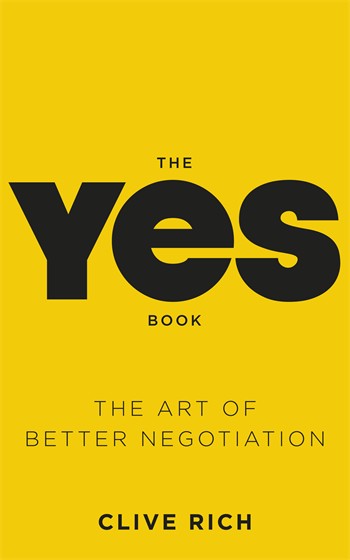
As the current economic uncertainty around the world continues, negotiation skills become even more important. This is one of the messages of my new book about the modern art of negotiation, “The Yes Book”, out on Random House on March 28th.

For five years now the global economy has been struggling against a backdrop of uncontrolled public debt, vulnerable banks, lack of credit for business and recession – all of the ingredients of that cocktail being inextricably linked. Whether it’s Eurozone bail –outs, Bank restructuring, or endless stories of single, double or even triple dips, you cannot avoid the conclusion that times are hard. This creates an imperative to negotiate better and more collaboratively…

We are all much stronger working together than we are on our own. In fact economic growth, which is the single answer to all of these problems can only be achieved if companies, governments and individuals engage in more trade – and deals are the basis of that trade.

In case you needed it, here is a reminder of some of those economic stats:

Firstly in the UK
UK growth fell again slightly in the fourth quarter of 2012, leaving Britain on the brink of a triple dip recession according to the National Institute of Economic and Social research forecasts. Only a return to growth in Q1 this year will avoid that almost unprecedented development.

The UK still has to overcome its continuing public debt problem (currently standing at 73.8 percent of GDP) and the loss of its cherished AAA rating.

Britain is apparently heading for a fifth year of falling living standards, with official figures showing a decline in average earnings growth last year from 1.7% to 1.4%.

All of this has had […]

By |March 9th, 2013|Blog|Comments Off on 7 Reasons to be good at Negotiation: Part 4 – It’s a sign of the times… The Global Economy

7 Reasons to be good at Negotiation: Part 5 – Social Media scandals are no joking matter

Here are a couple of good Twitter jokes about the recent horsemeat scandal that got re-tweeted numerous times;

ThatSillyGinge:
“Horse meat has been found in Ikea’s restaurants. There’s a joke in there somewhere, but you’ll need to assemble it yourself. #HorseMeat”

paranoiiddd:
”Not interested Tesco’s horse burgers? Try their meatballs – they really are the dogs bollocks” #tesco #horsemeat #joke”

But these kinds of jokes are no laughing matter for the Brands involved. The development of social media means that negative comment about Brands can go viral very quickly. As public relations consultant Katie Delahaye Paine commented in USA today;

“It’s all over Twitter. You can’t ignore anything related to food these days because it spreads around the world so quickly.”

This trend shows how social media is changing the nature of the negotiations that go on daily between Brands and consumers for their attention, their custom and their goodwill. This is one of the themes covered in my new book on negotiating, “The Yes Book”, out on Random House on March 28th.

Brands can no longer assume that they can dictate their own marketing messages, fuelled by spin. Consumers have an increasingly vocal say in the reputation of Brands and this means that in their negotiations with us Brands have to be ethical, transparent and considerate. In the terminology of my book they need to be “Fusers” genuinely concerned with the interests of their customers, rather than “users” only interested in their own gain, often at the expense of the consumer. This is yet another example of a number of social trends outlined in the book which all point to the need for us to raise our game as negotiators, and consciously apply a negotiating framework to our deal […]

By |March 17th, 2013|Blog|Comments Off on 7 Reasons to be good at Negotiation: Part 5 – Social Media scandals are no joking matter

Overcoming Deadline Pressure in a Negotiation

We often find ourselves negotiating against deadlines – often imposed by the other side. This can be very stressful and makes us vulnerable to making unwanted concessions, just to get the deal done.

“If the deal’s not done by Tuesday, there’s no deal”, would be a typical demand from the other side.

“Ouch! That pressure is doing my head in” would be a typical internal response.

There are two possible scenarios here;

The first is that the deadline is just a tactic from the other side. Tough guys often use deadlines tactically to heap pressure on their opponents. The answer in this case is to test the deadline. If it is not real they will back off. You can ask them something like; “So are you saying that if the deal is done on Wednesday rather than Tuesday, and we all get more out of it then you don’t want to do the deal?” If the deadline is real then the only possible answer this question is “Yes”. However, more often than not, you will get a conditional response e.g. “I’m not exactly saying that, we just need to get the deal done quickly”. If you get that kind of answer then you know that the deadline is not real. You also know that it is probably worth ignoring any other pressure tactics applied by this person, as they don’t really mean it.

But what if the deadline IS real – for either the other side or you? One option here is to share the negotiating problem and its solution – brainstorm the answer together. You can say something like “look, we are all in this together, we both need a satisfactory outcome […]

By |August 19th, 2013|Blog|1 Comment