Blog

Finding the key to open a Deadlocked Deal

Deadlock in deal making can arise for a number of different reasons.

However, one reason which is particularly common is that the parties get stuck having a positional negotiation based solely on what they want- this price, that delivery date, that number of units, etc…

Positional negotiations are bad news as they don’t give the parties any flexibility. If I want to buy something for £50 and you want me to pay £1,000, then there is no obvious way of resolving the disagreement without one of us disappointing the other which is very frustrating for everybody. In this situation it’s quite common for the negotiation to be marked by bad feeling, as if you are attacking my position it can feel as though you are attacking me personally.

One way to avoid this kind of positional deadlock is to focus on “why” people need the things they say that they want:

If you want a high price off me there can be lots of different reasons why you need that. For example maybe getting that high price may make you feel that you have achieved something special;

or maybe it will make you feel reassured so that you can trust me;
or maybe it will make you feel respected;
perhaps it will make you feel that you and I belong in the same club;
or maybe you are just desperate and you need that high price in order to avoid going bust.

If I am able to work out why you “need” that high price than we can find another way of structuring the deal which meets that need but may not be about price. Suddenly we have far more options.

For example if you have a need for reassurance I might be able […]
By |August 16th, 2013|Blog|Comments Off on Finding the key to open a Deadlocked Deal

How to Negotiate through Relationship Breakdown

Very often we have to negotiate in circumstances where a relationship has previously broken down, or breaks down during the negotiation process. This is not an easy scenario. Discussions against this backdrop may be marked by recriminations, mistrust, suspicion, mistaken presumptions about the attitude and motives of the other side, and a whole host of bad behaviours including sarcasm, contempt and aggression. This presents us with the question, how do you begin to repair a broken relationship?

Here are some options:

Recognise the problem:
Firstly, acknowledge the problem at hand rather than ignoring it. “We don’t seem to be getting on very well. What can we do to change that?”

Listen and offer an understanding:
Secondly, if you want to restore trust you then have to really listen to the other side. Active listening involves summarising and playing back to the other side feelings as well as information – “I can see you are very upset by that”…. One of best pieces of advice ever given to me as a negotiator was to “use your mouth and your ears in the proportions God gave you”. That means twice as much time should be spent listening in a negotiation as talking. This is particularly important when trust has gone astray. Listening also means acknowledging the validity of the other side’s feelings, “well, I can see why you are upset, looking at it from your point of view, even though I view it differently.”

Make positive changes:
Other tips include breaking the patterns of behaviour which have created the bad relationship. Change the venue where you usually meet. Change the make-up of the teams so as to introduce new players not affected by the same emotional baggage. If you never socialise […]

By |August 12th, 2013|Blog|Comments Off on How to Negotiate through Relationship Breakdown

Understanding Your Bargaining Power In Negotiation

People frequently believe that they don’t have enough bargaining power in a negotiation and that the other side holds all the aces. This is very damaging, as if you don’t believe you have enough bargaining power you won’t bid ambitiously, and you may look and sound apprehensive. This encourages the other side to push you harder, and before you know where you are, the negative outcome you were fearing has happened.

It is normally a misconception that the other side has all the bargaining power since there are at least 10 sources of bargaining power and they are rarely arranged 10-nil in favour of anybody – you always have more aces than you think.

For example:

You may not be a big company but you may have “niche” marketing power – the power to command a particular desirable niche.

Your smaller size may make you more nimble or flexible than a bigger company.

Maybe you command a scarce resource even though you are small.

Maybe you are small but have worked out plenty of alternative options to this deal – that gives you a kind of market power too.

You may have expertise on your side or extra information – you often hear people saying that “information is power” – they are right.

You may have “authority” power – because you have seniority or reputation on your side, or even a uniform – the police rely on the power of their uniform to negotiate successfully with the public every day.

You may have “network power”. This is the power to plug into a network that can be marshalled in your support. If you have a big network that someone else wants access to that can be just as valuable as having […]

By |August 9th, 2013|Blog|Comments Off on Understanding Your Bargaining Power In Negotiation

The Hare and the Tortuous

Interesting piece from Andrew Sullivan in the Sunday Times about Obama’s approach to negotiations in foreign policy hot-spot areas like Iran and Israel (here). Sullivan argues against the conventional wisdom that Obama has been unsuccessful in making progress in negotiations with these two countries, but is instead playing a “long game”. If this is true then this kind of patience is a good example of an approach which is all too often absent in modern negotiations, where participants often look too impatiently for quick wins.

Iran’s regime has shown no inclination to compromise over its alleged development of nuclear weapons, and Israel has belligerently resisted efforts to force it to embrace a two state solution for Palestine or even to take a backward step in relation to building settlements in “occupied” territory. Yet Sullivan argues that Obama has simply been taking his time and allowing those who oppose him to defeat themselves rather than forcing the pace. Iran has become weaker economically as sanctions have bitten, and its currency is almost worthless. Obama has persuaded even China and Russia to impose sanctions. Sullivan argues that Religious leaders of Iran may be close to either being forced to accept international scrutiny of their nuclear power programme – or they risk being isolated internationally and presiding over an increasingly mutinous population. Israel has also become more isolated by its intransigence – its relationships with supporters like Turkey and the US have cooled significantly. It now faces the development of a non-Jewish majority in the territories it refuses to let go. The US can safely dilute its support even further as it becomes less dependent on Middle-eastern oil and more able to rely on home produced […]

By |February 6th, 2013|Blog|Comments Off on The Hare and the Tortuous

How To Deal With Tough Guys In Negotiation

We have all encountered tough guys in our negotiating experiences. These are people who try to manipulate or exert pressure tactically – they are only in it for themselves. They may shout, make threats, play good cop/bad cop, issue ‘take or leave it’ ultimatums, or just plain lie.

It’s tempting to ignore these people, and not to descend to their level. That’s the professional thing to do, right? Wrong. If people are behaving badly then the best thing to do is to stop the negotiation and make their behaviour the issue. Since most bad behaviour is tactical, if you show that you know what is going on, then mostly the tough guy will drop the bad behaviour – there is no point continuing with it if the tactic has been rumbled.

So, if someone is shouting at you, you can say something like;

“Would it help if I shouted too?” or…

“I’m curious, what would you do if you walked into a negotiating meeting and someone shouted at you?” or…

“We believe in negotiating not shouting, shall we start again?”.

Any intervention like this will stop the bad behaviour – you don’t have to be as aggressive as they are being in order to make the point.

Equally, if someone is paying “good cop/bad cop” with you, then you can say something like “I’m confused, one of you is being very helpful about this and the other is being very tough. Let’s take a five minute break so you can agree a common approach and then we can start again”. That should sort it out.

If someone accuses you of being “unfair” or “unreasonable” when that is what they are doing themselves, you can ask them “what do you mean by “fair”?”. […]

By |July 31st, 2013|Blog|2 Comments

7 Tips to Enjoy Life While Negotiating

The personal negotiations we face in our daily lives can become a source of stress and anxiety. Whether making a deal for a house sale or vying for that salary raise, the process can overwhelm you – but does it have to? Jordan Milne and Martin Bjergegaard, Co-Authors of The International Bestseller Winning Without Losing (http://winningwithoutlosing.org/) share how strategies in their new book can be carried through to negotiation in both business and your personal life to help you win on all levels while enjoying the ride. These tips help you to maximise winning results without losing out in other areas of your life:

Focus on the wildly important: It is easy to fall victim to spending countless hours negotiating something that ultimately ends up being insignificant or trivial to us – either because we get engaged (by others), want to be ‘’right’’ or believe it to be important at the time. One of the secrets to having a balanced life and approach to negotiation is knowing yourself well enough to determine what is truly important to you (the wildly important)- and saving your energy to ‘’fight’’ for those. Being selective in what you take on opens up your schedule for what is truly necessary. Once you establish that something is indeed worth negotiating, focus on the wildly important once again – the few key things that really matter within that negotiation itself.

Get your timing right: In business as in life, timing is everything. The same holds true for negotiation – choosing when to engage can make all the difference. Before entering into an important negotiation, consider and evaluate the best time on 3 levels: for yourself, for your ‘’opponent’’ and the macro-climate. […]

By |August 27th, 2013|Blog|Comments Off on 7 Tips to Enjoy Life While Negotiating

Press Release 4th March 2011

Secrets Of Negotiation To Be Shared With UK Start-Ups
Simon Cowell’s Lawyer Clive Rich To Share Professional Deal-Making Insights
London, 4th March, 2011 – Clive Rich, the leading UK media lawyer and driving force behind successful deals for Simon Cowell, Sony, MySpace and The Royal Opera House has today announced the launch of Secrets Of Negotiation, a new series of seminars aimed at sharing professional negotiating skills with UK start-ups, SMEs and entrepreneurs.

The new events, which start on the evening of March 16th in London, will provide attendees with the ability to recognise the key stages of a deal and the skills to move through them successfully. It will also deliver tips on how to take control of negotiations and share insider knowledge on how to influence the opposition in order to gain the winning edge and close deals successfully.

Clive Rich added; “Sound negotiating skills are critical for all sorts of situations relevant to SMEs, start-up companies and entrepreneurs, including funding agreements, licensing deals, distribution deals and exit plans. But for whatever reason, deal-making is something that is still generally done by instinct rather than learned skills or training. I have launched the Secrets Of Negotiation seminars in order to share the skills I have gained over years of negotiating with some of the world’s toughest opposition in media, entertainment and business.”

Event attendees will also be introduced to the ‘Close My Deal’ iPhone negotiating app which provides interactive tools and content to help start-ups, SMEs and entrepreneurs achieve the best possible deals in the course of real-life situations.

The ‘Secrets Of Negotiation” events are presented in partnership with entrepreneur and leading human behaviour coach James Stokes. The first session will be held on the evening of Wednesday, […]

By |March 3rd, 2011|Blog|Comments Off on Press Release 4th March 2011

Nobody Takes any Notice of Me in Negotiation

This is a common problem- you feel that whatever you do, your issues are being ignored in the negotiation. This is frustrating and can be very costly.
Sometimes the problem here is the attitude or mind-set you bring to a negotiation. If you go into a negotiation feeling like it’s going to go badly then that is what is likely to happen. Any anxieties or lack of confidence seep out to the other side, who sub consciously or otherwise will try to push you harder as a result. This in turn makes you more anxious and hesitant. You can’t get your words out, your body language looks weak. No wonder the other side isn’t paying any attention to your needs – they don’t feel that they have to.
This kind of attitude can be dispelled in various ways. You can coach yourself into a more optimistic frame of mind by reminding yourself of occasions when you have negotiated well in the past or felt more confident. You can also make sure you have a proper perspective of the challenge represented by the negotiation, rather than relying on a distorted view of it or over generalising based on exaggerating the impact of small problems. You could also make sure you have someone with you who feels more confident and assertive than you and helps lift your own confidence.
The other reason that people may not be taking you seriously is if you bid uncertainly. When you make offers you need to be assertive; “I want” or “I need” or ” I require”. Many people fail to do this and ask for what they want in a conditional or wishy-washy way; “would it be alright if…?” Or “could I […]

By |September 9th, 2013|Blog|Comments Off on Nobody Takes any Notice of Me in Negotiation

Striking similarities

All too often in industrial disputes, the two sides appear to get locked into a mental attitude of “losing both ways”. One or both sides decide that they can’t get what they want, and so they make it their business to punish the other side. This then becomes a more important objective than thinking round the problem to find a new solution which suits everybody.

I was reminded of this when reading in the Guardian that the Public and Commercial Services union has warned of new strike action over its ongoing dispute concerning pay, pensions and working conditions (here). It has said it will ballot its 250,000 members starting tomorrow. The union, led by the redoubtable Mark Serwotka, has already held three previous days of strike action, and is now focused on a review of working conditions which it says threatens working hours, sick pay and holiday benefits.

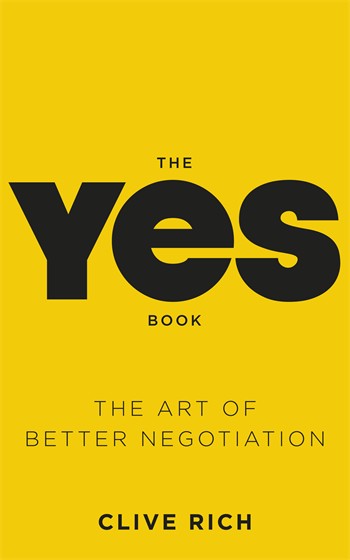
Given the current Government priority to manage the Public Sector deficit, this is not an argument which the Union is likely to win – the Government is determined to rein in Government spending. So strike action may seem like a good way of punishing the Government, even though it does not bring about any greater prospect of negotiating success, is disruptive for members of the Union and the General public, and may well harden Public opinion against the Union cause. This is losing both ways in action. I mention this phenomenon in my forthcoming book on negotiation, “The Yes Book”, published on Random House on March 28th. Here is a story, originally written for the book, though I subsequently took it out, about the UK Miners’ strike of 1984 which illustrates the futility of taking […]

By |February 6th, 2013|Blog|Comments Off on Striking similarities

Let’s drink to a “fusing” approach to negotiation

Having just written a blog on the futility of “losing both ways” as an attitude in a negotiation, I wanted to write something more positive about the benefits of “fusing”.

“Losing both ways” is a mutually self –destructive approach in which one or both sides decide that they can’t win the negotiation so they set about causing each other harm instead. “Fusers” by contrast are interested in a more collaborative approach to negotiation, in which the needs of both parties are met. I have written about the benefits of “fusing” in my forthcoming book on negotiation, “The Yes Book – The Art of Better Negotiation” to be published by Random House on March 28th. Many people have kindly contributed negotiating stories as I was writing the book, not all of which I was able to include in the final version. Here’s a good one on the benefits of a “fusing” solution from Mat Morrisroe based around the deal he constructed between Bacardi and the Artist “Groove Armada”.

Bacardi Deal is a ‘Breeze’

“Bacardi wanted to create a branded experience for Music but they wanted to do something more than just brand a tent at a music festival. I had been brought into the agency KLP to do something different and I had a background in Music. We selected Groove Armada because they were free from their previous contract with a Major Record company and therefore had more freedom to act. They also had a collaborative manager, and the artist were seen as both credible and socially responsible – a great combination for a drinks Brand. We initially put on a concert with them in Moscow, and then decided to build on the collaboration by creating […]

By |February 6th, 2013|Blog|Comments Off on Let’s drink to a “fusing” approach to negotiation